Every hole in your roof is a decision we have to defend for 25 years
Mounting method, flashing detail and warranty handling for each roof covering we see in Fresno County, including the one we will not install on.
Find your roof covering
Seven coverings, seven different answers. The flashing detail is what separates a roof that lasts from one that leaks in its third winter.
Composition asphalt shingle
We install on this- Attachment
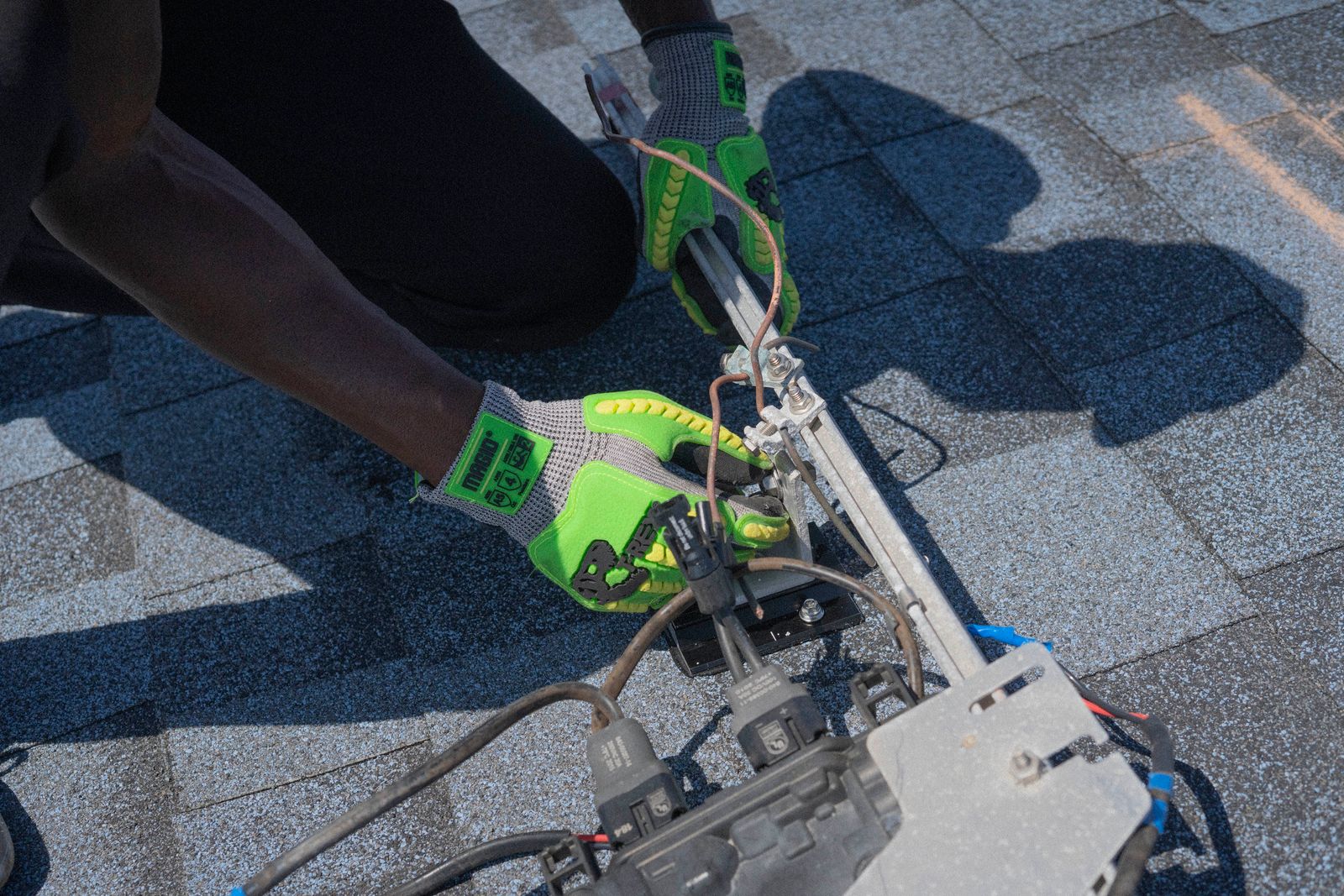
- Flashed L-foot lagged into the rafter
- Flashing
- Butyl-backed aluminium flashing, 9 x 12 in, slid under the course above so water runs over it, never into a bead of sealant
- Penetrations
- 6 to 8 per kW DC
- In practice
- 5/16 in lag with 2.5 in of thread embedded in the rafter, pilot-drilled, torque checked. We locate every rafter with a stud scanner from the attic side, not by guessing off the ridge.
- Warranty
- Shingle manufacturer warranties survive when the flashing is correct. We add a 25-year penetration warranty on top and we own the roof leak either way.
Concrete or clay S-tile (barrel)
Survey first- Attachment
- Tile hook, or a standoff post with a tile replacement pan
- Flashing
- Base flashing bonded to the underlayment, then the tile is cut and reseated over it. Nothing relies on caulk.
- Penetrations
- 6 to 8 per kW DC
- In practice
- Expect to break 2 to 5 percent of tiles during the lift. We price replacements in up front and source matching tile before we start, because a 1990s profile can take three weeks to find.
- Warranty
- Tile roofs are watertight at the underlayment, not the tile. If your underlayment is over 20 years old we will quote the reroof first rather than warranty a roof we do not trust.
Flat concrete tile
We install on this- Attachment
- Tile hook over a replacement pan, or a full tile-replacement mount
- Flashing
- One-piece steel pan that takes the place of a tile and laps the underlayment above and below
- Penetrations
- 6 to 8 per kW DC
- In practice
- Flat profiles take a replacement mount cleanly and usually break fewer tiles than a barrel profile.
- Warranty
- Same underlayment rule as S-tile. 25-year penetration warranty from us.
Standing-seam metal
We install on this- Attachment
- Seam clamp. No holes at all.
- Flashing
- None required, because nothing penetrates the panel
- Penetrations
- Zero
- In practice
- The best roof we can be handed. Clamps grip the seam and the array load spreads along it. Setscrew torque is spec-critical and gets logged.
- Warranty
- The metal roof warranty is untouched because the covering is never pierced. This is the only assembly where that is true.
Corrugated or R-panel metal
We install on this- Attachment
- Through-fastened mount at the rib crown
- Flashing
- EPDM-bonded washer under the fastener head, set at the high point of the rib where water does not stand
- Penetrations
- 8 to 10 per kW DC
- In practice
- Fastening into the flat between ribs is the classic failure and we will not do it. Purlin spacing, not rafter spacing, drives the layout.
- Warranty
- Most panel warranties allow rib-crown penetrations with a bonded washer. We confirm with your panel maker in writing before install.
Low-slope TPO, PVC or EPDM membrane
Survey first- Attachment
- Ballasted or mechanically attached tilt racking
- Flashing
- Ballasted: none, the array floats on protection pads. Attached: a welded membrane boot by your roofer's certified installer, never by us.
- Penetrations
- Zero ballasted, or 2 to 4 per kW DC attached
- In practice
- Ballast adds 4 to 6 lb per sq ft, so it needs a structural sign-off before it is an option. Wind uplift on a tilted array at a roof edge is the governing load, not the weight.
- Warranty
- Membrane warranties usually require a certified applicator for any penetration. We coordinate that rather than risk voiding it.
Wood shake or shingle
We decline- Attachment
- Not recommended
- Flashing
- No flashing detail we are willing to stand behind for 25 years
- Penetrations
- Not quoted
- In practice
- Shakes split under foot traffic, cannot be lifted and reseated reliably, and most of the Valley stock left is near end of life. Local fire rules have also pushed replacement.
- Warranty
- We decline rather than write a warranty we would not honour. We will quote solar with a reroof in the same project instead.
How a penetration is actually made
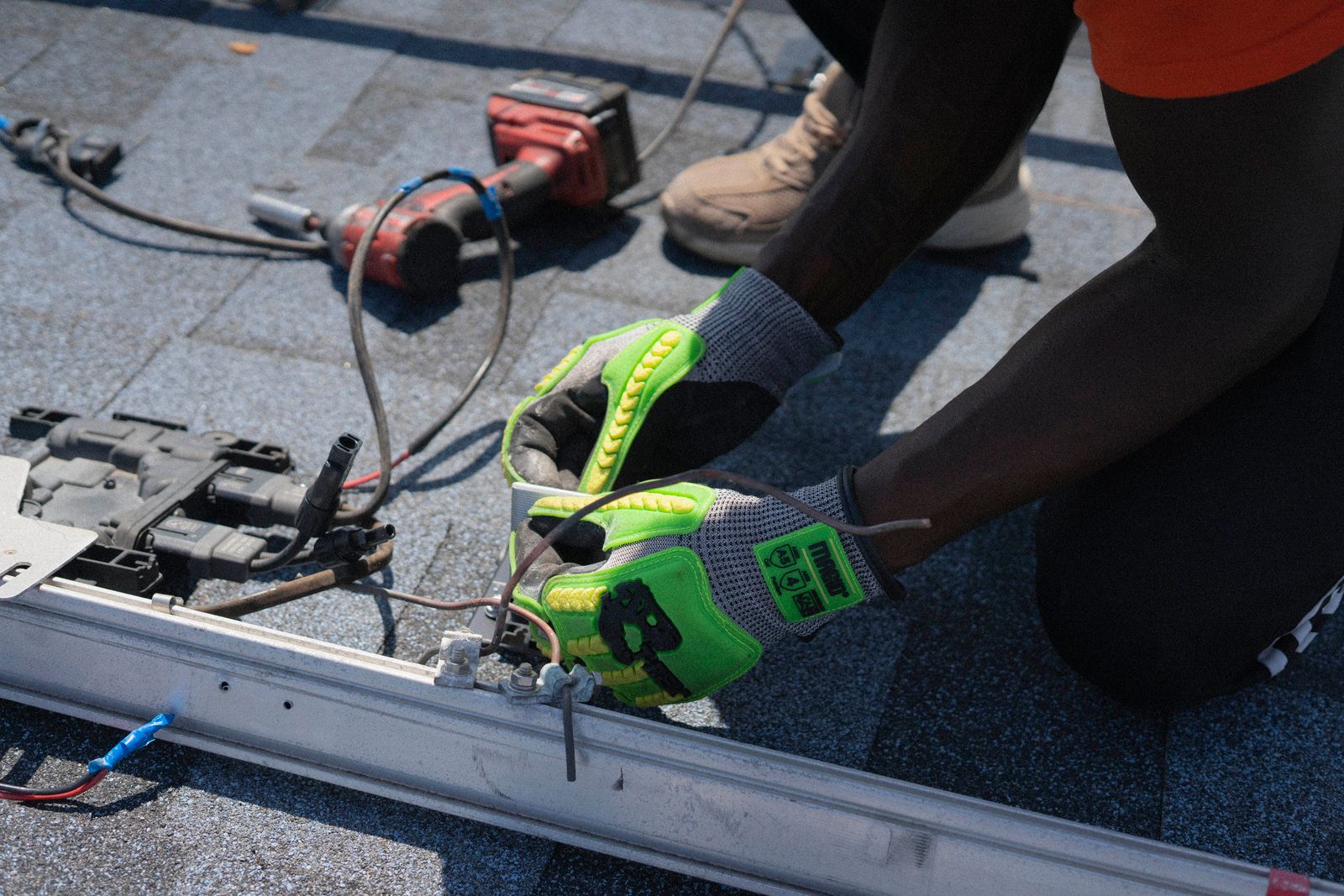
Five steps that decide whether a roof is watertight in year twenty. None of them are visible once the modules are on.
Find the framing before the first hole
We map rafters or trusses from inside the attic and transfer the marks to the roof. On a truss roof we also check that the top chord can take a point load where we want it, because 2x4 trusses at 24 in on centre are not the same structure as 2x6 rafters at 16 in.
Pilot, not punch
Every lag gets a pilot hole sized to the shank. Driving a lag dry splits the rafter along the grain, and a split rafter holds a fraction of its rated withdrawal load.
Flash over, never seal only
Water management beats sealant every time. The flashing goes under the course above so the roof sheds over it. Sealant is a secondary defence under the flashing, never the primary one.
Torque and log
Lags are torqued to the racking manufacturer's figure and recorded on the install sheet. That sheet is what makes a warranty claim a five-minute conversation instead of an argument.
Walk it wet
Before the crew leaves, every penetration gets hosed and the attic gets checked underneath. Finding a leak on install day costs an hour. Finding it in January costs a ceiling.
Not sure what is under your modules?
Send us a photo of your roof and a recent bill. We will tell you the covering, the likely attachment method and whether we would reroof first, before anyone visits.
Attachment and warranty questions
Not if the penetration is flashed the way the covering's manufacturer requires. Most shingle and metal warranties explicitly allow flashed penetrations. The exceptions are membrane roofs, where a certified applicator has to make the penetration, and wood shake, which is why we decline shake outright.
Us, always. We carry a 25-year penetration warranty on every hole we make, and we will not send you to argue with a roofer about whose hole it was. If the leak turns out to be somewhere we never touched, we still find it and tell you who should fix it.
Six to eight per kW DC on a shingle roof, so a 7.8 kW DC system means roughly 50 attachments. On standing-seam metal the answer is zero, because seam clamps grip the rib without piercing the panel.
Almost certainly. A composition roof at 18 years has under a decade left, and lifting the array later to reroof costs about $1,950 as a sample figure for a 7.8 kW DC system. Doing both in one project costs less than doing them five years apart, and we will tell you that before you sign.
Flashing, with sealant only as a secondary defence beneath it. Sealant is a consumable that fails in Valley UV inside a decade. Water management means the roof sheds over the flashing, so the joint stays dry even after the sealant has aged out.